
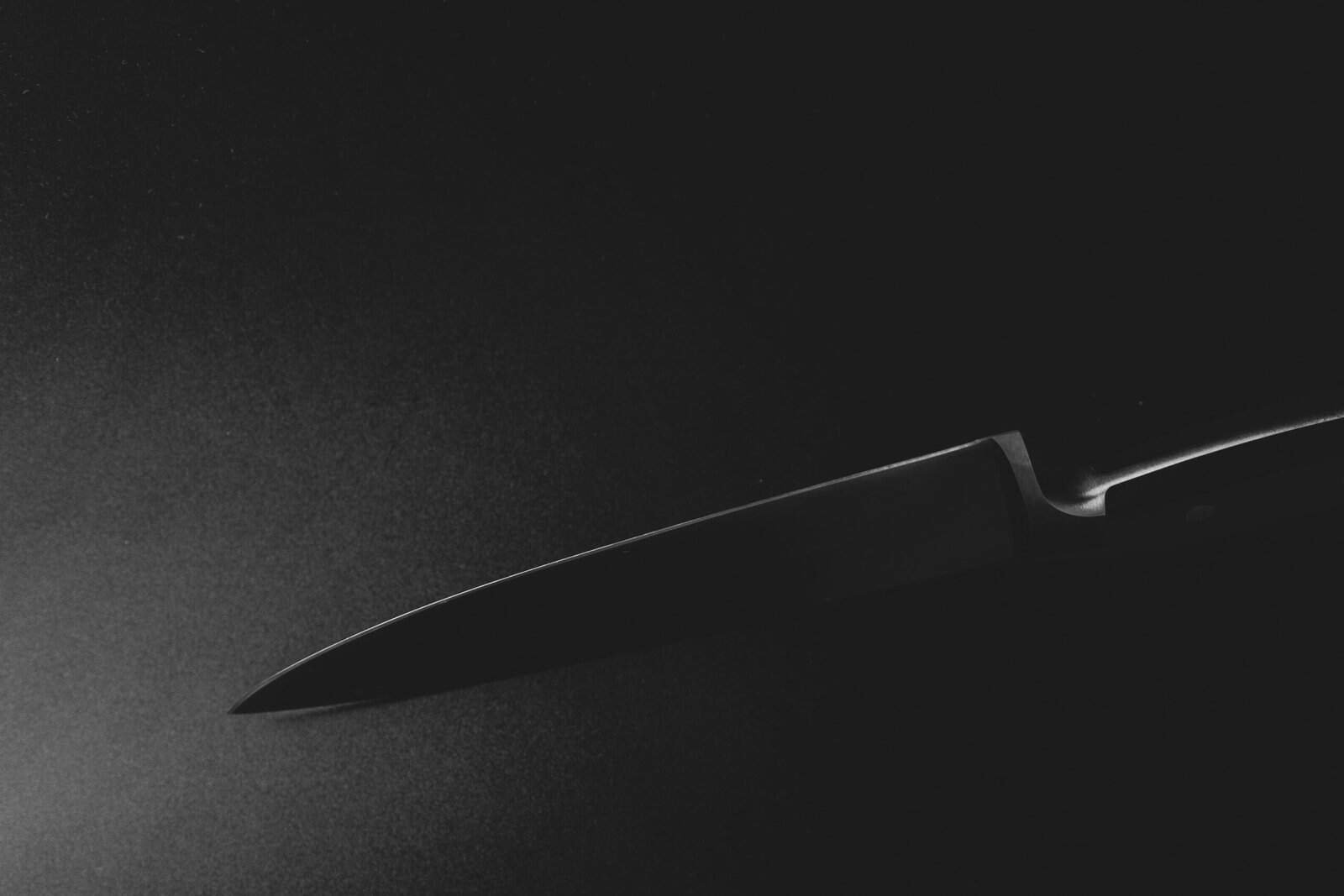
The fastest way to tell if a knife is sharp is the paper test: hold a sheet of printer paper and slice down through it, and a sharp knife glides cleanly while a dull one snags and tears. Knowing whether a knife is sharp matters because a dull knife is both frustrating and genuinely dangerous, since it takes more force and slips more easily. A few quick tests tell you where your edge stands without any guesswork.
Quick Answer
Slice through a sheet of paper held vertically. A sharp knife cuts a clean line with no tearing; a dull one catches, folds, or rips. The paper test takes seconds and is the most reliable at-home check for whether an edge needs sharpening.
Key Takeaways
- The paper test is the quickest reliable sharpness check.
- A sharp edge bites into a tomato skin with no pressure.
- Looking at the edge in light reveals dull, reflective spots.
- A dull knife is more dangerous than a sharp one.
- Never test sharpness by running a finger along the edge.
The Paper Test
| Result | What it means |
|---|---|
| Clean glide through paper | Sharp, ready to use |
| Some drag but cuts | Getting dull, hone it |
| Snags, folds, or tears | Dull, needs sharpening |
Hold a sheet of ordinary printer paper by one edge so it hangs freely, then draw the knife down through the top edge in a slicing motion. A sharp knife slices a clean, straight line and keeps going without effort. A dull knife catches on the paper, crumples it, or tears a ragged edge. This test is quick, needs nothing special, and gives an honest read on the edge, which is why it is the standard first check.
The Tomato Test
A ripe tomato is a demanding target because its smooth skin resists a dull blade. Rest the edge on the tomato’s skin and draw it back with no downward pressure. A sharp knife bites in immediately and slices cleanly; a dull one skids across the surface or needs you to press until the tomato squashes. Because the skin is slick and the flesh soft, the tomato exposes an edge that the paper test might just barely pass. It is a good second opinion when you want to be sure.
Look at the Edge in Light
A sharp edge is so fine it has almost no surface to catch light. Hold the knife under a bright light and look straight down at the cutting edge. A truly sharp edge nearly disappears, showing as a thin dark line. Dull spots and rolled sections catch the light and glint back at you as tiny bright points or lines. Running your eye along the whole edge this way shows where the blade has worn, which is useful for spotting a knife that is sharp in places and dull in others. It is a visual check that complements the cutting tests.
Sharp Versus Dull, and Why It Matters
A sharp knife does the work for you, gliding through food with light, controlled cuts. A dull knife forces you to push, and that extra force is exactly what makes it dangerous: when a dull blade finally slips off a tomato skin or an onion, it carries all that pressure toward your hand. Sharp knives are safer because they cut where you aim them with minimal force. If your tests show a dull edge, sharpening is not just about performance; it is the safer choice. Why knives get dull covers what wears an edge down. Sharpening a knife covers restoring it.
The Test to Never Use
The one method to avoid is dragging your finger or thumb along the edge to feel for sharpness. It is a reliable way to cut yourself and tells you little that the safe tests do not. If you want to feel an edge, gently touch across it, running your fingertip perpendicular to the blade rather than along it, to sense whether it feels crisp or rounded. Better still, stick to the paper and tomato tests, which give a clear answer with no risk. A sharp knife deserves respect, and testing it safely is part of that. Storing knives safely covers protecting the edge you have.
Building a Quick Routine
Checking sharpness takes seconds and is worth doing before a big cooking session or whenever a knife starts feeling like more work than it should. The paper test alone catches most dull edges, and the tomato test confirms borderline cases. Once you know a knife is dull, honing may restore a slightly rolled edge, while a truly worn one needs sharpening. Keeping an eye on your edges means you catch dullness early, before it turns cutting into a chore or a hazard. Knife sharpeners cover the tools for bringing an edge back.
What to Do Once You Know
The test result points to the next step. If the paper test glides clean, the knife is ready and needs nothing. If it drags but still cuts, the edge has likely rolled slightly and a few passes on a honing steel may bring it back. If it snags and tears, the edge is worn and needs actual sharpening to remove metal and form a new edge. Matching the action to the test keeps you from over-sharpening a knife that only needed honing, which removes metal and shortens the blade’s life unnecessarily. Test first, then choose honing or sharpening based on what you find. Choosing a kitchen knife covers picking blades that hold an edge well.
Recommended Reading
Worth reading next: why knives get dull, how to sharpen a knife, knife sharpeners, and storing knives safely. It also helps to understand getting the most from a sharpening steel.
Testing Different Knife Types
The same tests work across your knives, with small adjustments. A chef knife and a paring knife both pass or fail the paper test the same way, so it is the go-to for most blades. A serrated knife, like a bread knife, is harder to judge by paper since the teeth do the cutting, so for those you rely more on whether they still saw through a crusty loaf cleanly. For a very fine edge, the tomato test is the more demanding check. Running the same quick paper test across all your straight-edged knives now and then tells you which ones have drifted dull and need attention, so you catch the worst offenders before they turn a simple task into a struggle.
How to Tell if a Knife Is Sharp FAQ
How do I test if a knife is sharp?
Slice through a sheet of printer paper held vertically. A sharp knife glides through cleanly; a dull one snags, folds, or tears. The paper test takes seconds and is the most reliable at-home check. A ripe tomato is a good second test for borderline edges.
What is the tomato test?
Rest the edge on a ripe tomato’s skin and draw it back with no downward pressure. A sharp knife bites in and slices cleanly; a dull one skids or squashes the tomato. The slick skin makes it a demanding test that exposes edges the paper test barely passes.
Can I tell by looking at the edge?
Yes. Hold the knife under bright light and look down at the edge. A sharp edge nearly disappears as a thin dark line, while dull or rolled spots glint back as bright points. This shows where along the blade the edge has worn.
Is it safe to feel the edge with my finger?
Not by running your finger along it, which invites a cut. If you must feel it, touch gently across the edge, perpendicular to the blade, to sense whether it feels crisp or rounded. The paper and tomato tests are safer and clearer.
Why does knife sharpness matter for safety?
A dull knife needs more force and slips more easily, carrying that pressure toward your hand when it skids off food. A sharp knife cuts where you aim with light pressure, making it safer as well as easier. Dullness is a safety issue, not just a performance one.
How often should I check my knives?
Before big cooking sessions and whenever a knife starts feeling like more work than it should. A quick paper test catches most dull edges early, before cutting becomes a chore or a hazard. Regular checks let you hone or sharpen at the right time.
What is the difference between honing and sharpening?
Honing realigns a slightly rolled edge and can restore some cutting feel quickly, while sharpening removes metal to create a new edge on a truly worn knife. If a knife is only mildly off, honing may be enough; if the paper test fails clearly, it needs sharpening.
See the complete guide: the full guide to choosing the right cookware for your kitchen.
Board movement affects control as much as edge condition. Keeping the board still covers weight and grip.
