
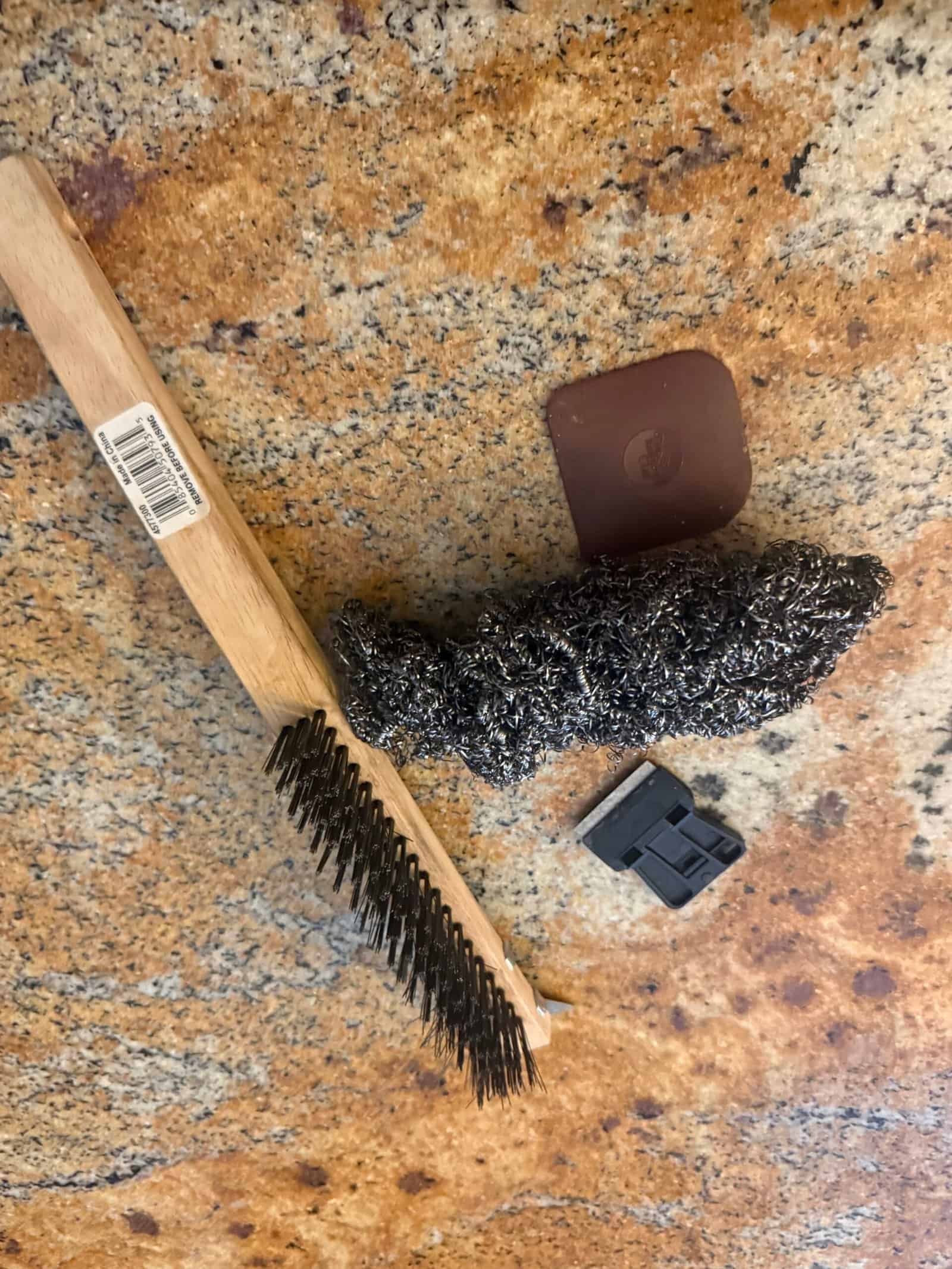
Reach for chainmail as your daily scrubber and keep a stiff brush for the jobs chainmail cannot finish. Chainmail scours stuck food off a cast iron skillet without cutting into the seasoning, while a brush moves debris faster on heavy messes and gets into corners the mail skates over.
Most people only need one of them most nights, and knowing which one that is saves you buying both and using neither. The choice comes down to how baked-on your worst messes get and how much you care about the seasoning layer underneath.
Quick Verdict
Chainmail is the better default. It handles the majority of cleanups, lasts years, and leaves seasoning intact. Choose a stiff brush instead if you cook heavily crusted food often, want something easier to grip, or need to work the sides and corners of a pan where flat mail loses contact.
Key Takeaways
- Chainmail scours without cutting seasoning, which is why it became the default
- A brush moves heavy debris faster and reaches corners better
- Chainmail is awkward to hold, and that is its main real drawback
- Neither needs soap, and neither should be used on a cold dry pan
- Chainmail lasts years, brushes wear out and need replacing
- Owning both costs little and covers every situation
How We Compared
The criteria that matter for cast iron are narrow. Does the tool remove stuck food, does it leave the seasoning layer alone, how long does it last, and how pleasant is it to use over a sink.
Price barely separates them, since both sit in the same low bracket. Cleaning the tool itself matters more than people expect, because a scrubber that holds food between uses becomes a problem of its own.
Neither tool needs soap to work, which sidesteps the older argument about whether soap ruins a pan. That question gets its own treatment in whether soap belongs on cast iron.
Chainmail vs Brush at a Glance
| Criterion | Chainmail scrubber | Stiff brush |
|---|---|---|
| Removes stuck food | Very effective on flat surfaces | Very effective, faster on heavy crust |
| Effect on seasoning | Leaves it intact | Leaves it intact if bristles are not metal |
| Corners and sides | Loses contact on curves | Reaches easily |
| Grip and comfort | Awkward, no handle unless it has a pad | Comfortable, handle keeps hands dry |
| Lifespan | Years | Months to a year, bristles splay |
| Cleaning the tool | Rinses clean, dries fast | Traps food between bristles |
| Works on other cookware | Stainless and carbon steel only | Most surfaces except nonstick |
Chainmail, Pros and Cons
- Scours hard without cutting into the seasoning layer
- Lasts years with no maintenance beyond rinsing
- Rinses completely clean, so nothing rots in it
- Flat construction loses contact on curved sides and corners
- Awkward to hold, and a wet square of metal rings is not a comfortable grip
- Useless on nonstick, where it would destroy the coating
Best for anyone who cooks in cast iron most weeks and wants one tool that will still be there in five years. Skip it if you have grip or dexterity limitations, since holding a bare mail square under running water asks something of your hands.
Stiff Brush, Pros and Cons
- Handle keeps your hand out of the water and lets you push harder
- Bristles reach corners, sides, and the join where the wall meets the base
- Moves heavy baked-on debris faster than mail does
- Bristles splay and soften, so it needs replacing periodically
- Traps food particles that need rinsing out or it starts to smell
- Metal-bristled versions can cut seasoning, so stiff plastic or natural fiber is the safer pick
Best for anyone who roasts, sears, or bakes in cast iron and faces a crusted pan most weeks. Skip it as your only tool if you dislike replacing things, since a brush is a consumable and mail is not.
Which Removes Stuck Food Better?
The brush wins on heavy crust and chainmail wins on everything else.
Chainmail works by dragging hundreds of small metal edges across the surface. On a flat skillet base with stuck egg or fond, that is efficient, and a few passes clear it. What mail cannot do is concentrate force on one spot, since the rings distribute pressure evenly by design.
A brush concentrates force at the bristle tips, which is what heavy carbonised debris needs. When something has genuinely welded itself to the pan, bristles get under the edge of it in a way flat mail does not.
Both work better on a warm pan with water in it than on a cold dry one, which matters more than the tool choice. The routine sits in cleaning a cast iron skillet.
Which Is Safer for Seasoning?
Chainmail wins, narrowly, and the gap is smaller than the marketing suggests.
Seasoning is polymerised oil bonded to the iron, and it is harder than people assume. Chainmail rings are smooth and rounded, so they slide across that layer and lift what sits on top of it. That is the whole design argument.
A brush with stiff plastic or natural bristles does much the same. Where brushes cause damage is when the bristles are metal, since fine wire concentrates enough force at each point to score the layer.
Seasoning that comes off easily was never well bonded. If yours lifts under normal cleaning, the fix is in fixing sticky seasoning rather than a gentler scrubber.
Which Lasts Longer, and Which Feels Better?
Chainmail wins on lifespan and the brush wins on comfort.
A stainless chainmail square has no wearing parts. The rings do not soften, splay, or shed, and short of losing it down the drain it outlasts most of the cookware it cleans. Brushes are consumables, and a brush a year old cleans worse than a new one.
Comfort runs the other way. A handle keeps your hand dry and lets you angle the head into a corner. Chainmail has no handle unless you buy a version with a silicone pad, and even then you are pressing a wet metal square against a hot pan.
How This Plays Out in My Kitchen
I have had the same cast iron skillet for over three years, and I own both tools. Chainmail is what I reach for first, every time. It handles the ordinary weeknight mess.
The wire brush comes out for heavy work. When something has genuinely baked on and the mail is just sliding over it, the brush is what finishes the job. That split has held steady, and I have never wanted to change it.
The honest complaint about chainmail is that it is awkward to use. There is no comfortable way to hold a square of metal rings against a hot skillet under running water, and I notice it every time. It is effective enough that I put up with it, and that is the trade rather than a hidden flaw.
I never use soap on the skillet, and I dry it with a towel rather than leaving it to air dry. My experience covers one skillet in ordinary home use, not enameled cast iron, not a heavily neglected pan, and not carbon steel, where the seasoning behaves differently.
Which Fits Your Situation
| If this is you | Better choice |
|---|---|
| You cook in cast iron a few times a week | Chainmail |
| You roast or sear things that carbonise | Brush, with mail as backup |
| You have grip or dexterity limitations | Brush |
| You want one tool for the next decade | Chainmail |
| You also clean stainless and carbon steel | Chainmail |
| You want to reach corners and pan walls | Brush |
| You dislike replacing worn-out tools | Chainmail |
How to Choose Between Them
Start with what your worst pan looks like after your most common meal. If it is stuck food on a flat base, chainmail covers it. If it is carbonised crust up the walls, the brush earns its place.
Budget rarely decides this, since both cost less than a single decent pan and owning both is the setup most cast iron users end up with anyway.
The Verdict
Chainmail wins as the everyday scrubber, on lifespan, on seasoning safety, and on how easily it cleans itself. The brush wins on heavy crust, on corners and pan walls, and on comfort in the hand.
Buy chainmail if you are buying one. Add a stiff brush if you regularly face baked-on messes or if holding bare mail is uncomfortable. Comparing what else belongs alongside them, cast iron accessories worth owning covers the wider kit, and stiff cleaning brushes covers bristle types.
Recommended Reading
- skillets worth the seasoning effort
- building the layer you are protecting
- how often re-seasoning is needed
- rust and what causes it
- storing pans without trapping moisture
- bringing back a neglected pan
- choosing the right cookware
Common Misconceptions
Chainmail will scratch the pan
Cast iron is harder than the stainless rings touching it. What chainmail can affect is the seasoning layer, and even that only when the layer was poorly bonded to begin with.
A brush is gentler than chainmail
Depends entirely on the bristles. Stiff plastic and natural fiber are gentle. Metal bristles concentrate force at fine points and will cut seasoning faster than mail does.
You need one because soap is forbidden
Modern dish soap does not strip a well-bonded seasoning layer. Both tools work without soap, which is convenient rather than mandatory.
Chainmail vs Brush FAQ
Is chainmail or a brush better for cast iron?
Chainmail for everyday cleaning, since it scours without cutting seasoning and lasts years. A stiff brush is better on heavily baked-on food and reaches corners and pan walls that flat mail skates over.
Will chainmail remove my seasoning?
Not if the seasoning is well bonded. The rings are smooth and lift what sits on top of the layer rather than cutting into it. Seasoning that comes off under normal cleaning was never properly polymerised.
Can I use a wire brush on cast iron?
Stiff plastic or natural bristles are the safer choice for routine cleaning. Metal bristles concentrate force at fine points and can score the seasoning layer, so they suit restoration work rather than everyday washing.
How long does chainmail last?
Years. Stainless rings have nothing that wears out, splays, or sheds, so a chainmail scrubber usually outlasts the pan it cleans. Brushes are consumables and need replacing as bristles soften.
Can I use chainmail on nonstick?
No. It will destroy the coating immediately. Chainmail suits cast iron, carbon steel, and stainless, and it can also mark the surface of enameled cast iron.
Should I own both?
Most people who cook in cast iron regularly end up with both, and together they cost less than a single decent pan. Chainmail covers ordinary cleanups and the brush handles what mail cannot finish.
Cast iron care is one part of maintaining a kitchen. looking after kitchen tools covers blades alongside pans.
Pan care sits alongside the rest of the kitchen. organising kitchen equipment covers where things live.
