
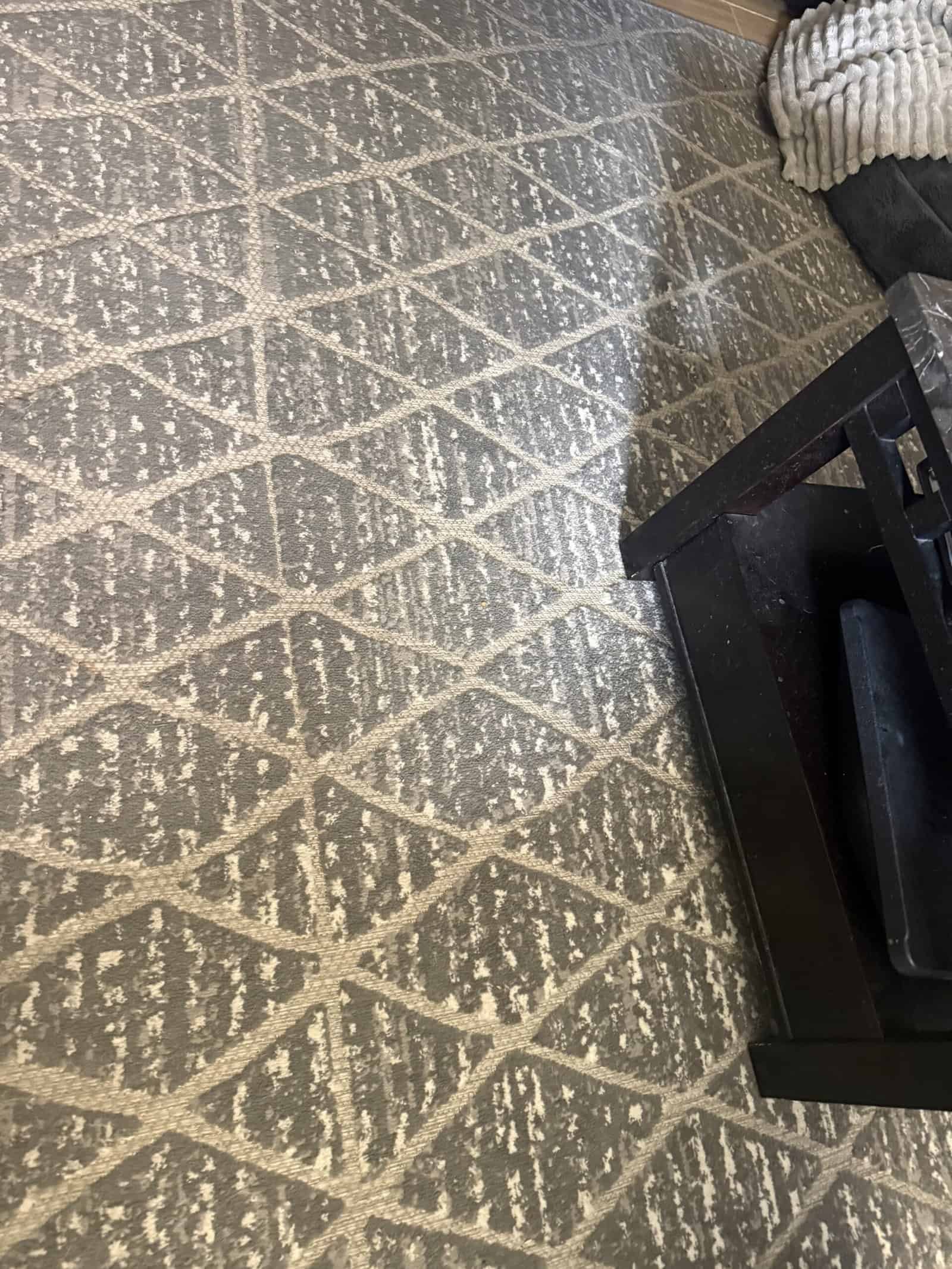
A living room rug has to survive traffic, hold furniture level, and be large enough to tie the seating together. Those three demands narrow the field considerably, and the rug most people buy fails at least one of them.
Mine is very large, low pile, sitting on hardwood with the coffee table on it. It has never slid and the table sits level, which is what a rug in this role needs to do. Our note on what size rug to buy covers the sizing question. Before buying a thicker rug, check how robot vacuums handle pile.
Types at a Glance
| Type | Best for | Limitation |
|---|---|---|
| Low pile synthetic | Traffic, furniture, easy cleaning | Less soft underfoot |
| Wool | Durability and feel | Cost, and it sheds initially |
| Flatweave | Thinnest, doors clear easily | No cushioning at all |
| Jute and natural fiber | Texture, neutral look | Hard to clean, rough underfoot |
| High pile and shag | Comfort in low-traffic rooms | Furniture sinks, hard to vacuum |
| Washable | Pets and children | Thinner, needs a pad |
How We Picked
Selections are grouped by construction and pile height, since those decide how a rug handles furniture and traffic more than any styling choice does.
Descriptions come from documented product characteristics alongside my own use of a large low-pile rug over hardwood.
1. A Large Low-Pile Synthetic, Best Overall
Why It Stands Out
Short fibers vacuum easily, hold furniture level, and let doors clear without any adjustment.
This is what I have and the coffee table sits on it without rocking, which a thicker rug would not manage.
Worth Knowing
Less soft underfoot than a plush rug, which is the trade for everything else.
Quality varies enormously within synthetics. Our note on furniture on rugs covers the stability question.
This suits most living rooms. Skip it if underfoot softness is the priority.
2. A Wool Rug, Best for Longevity
Why It Stands Out
Wool resists crushing better than synthetics, which means traffic paths and furniture dents recover rather than becoming permanent.
It also resists staining naturally because of the fiber structure.
Worth Knowing
Costs considerably more, and new wool rugs shed for the first several months.
Professional cleaning is generally recommended. Our roundup of cordless vacuums covers upkeep.
This suits a rug you intend to keep. Skip it on a tight budget.
3. A Flatweave, Best for Door Clearance
Why It Stands Out
Almost no thickness, which solves the problem of a rug stopping a door from opening.
Reversible on many designs, which effectively doubles the life.
Worth Knowing
No cushioning whatsoever, so it feels like the floor underneath.
Needs a pad on hard floors, since there is no weight to hold it. Our note on keeping a rug from sliding covers that.
This suits tight door clearances. Skip it if you want comfort underfoot.
4. A Washable Rug, Best for Pets and Kids
Why It Stands Out
Goes in a household machine, which removes the main objection to having a rug in a room where accidents happen.
Frequently sold as two pieces, a thin rug over a separate pad.
Worth Knowing
Thin by necessity, since it has to fit in a washer.
Check the machine size before buying a large one. Our roundup of vacuum and mop combos covers routine cleaning.
This suits households with pets. Skip it if you want substance underfoot.
5. A Jute or Natural Fiber Rug, Best for Texture
Why It Stands Out
Neutral tone and visible weave that works under almost any furniture without competing with it.
Durable and frequently cheaper per square foot than wool.
Worth Knowing
Rough underfoot, and difficult to clean since liquid soaks into the fiber.
Sheds fibers, particularly early on. Our roundup of entryway mats covers natural fibers in smaller formats.
This suits a layered or neutral room. Skip it where spills are likely.
6. A Plush or Shag Rug, Best for Comfort
Why It Stands Out
Genuinely soft underfoot in a way no low-pile rug matches, which suits a room where people sit on the floor.
Adds warmth over a cold hard floor.
Worth Knowing
Furniture legs sink unevenly and leave lasting dents.
Vacuuming is considerably harder. Our roundup of robot vacuums covers what struggles on deep pile.
This suits low-traffic rooms. Skip it if furniture sits on the rug.
Pile Height Decides Most of It
Pile height is the length of the fibers, and it affects daily life with a rug more than material or color do.
Low pile holds furniture level, vacuums in one pass, and lets doors clear without anyone thinking about it.
High pile is softer and works against all three. Legs sink at different rates, vacuums bog down, and door clearance becomes a measurement rather than an assumption.
Mine is not thick, which is why the coffee table sits stably and why cleaning is straightforward.
For a living room with furniture on the rug, low pile is the practical answer regardless of how a thicker one feels in a showroom.
Size Matters More Than Material
Undersized is the common error
A rug that only reaches the coffee table reads as a mat.
Furniture should touch it
Front legs at minimum, all legs if the room allows.
Leave a consistent border
Even bare floor around the edges, not wall to wall.
Larger makes a room look bigger
The uninterrupted surface reads as space.
Hard Floors Change the Requirements
Hardwood, tile, and vinyl are all smooth enough that a rug will travel unless something holds it.
Weight is the simplest answer. A rug large enough for furniture to sit on gets pinned in place by that furniture, which is why mine has never moved.
Where furniture cannot sit on the rug, a pad becomes necessary rather than optional, and on hardwood the pad material matters because some backings react with floor finishes.
Natural rubber is the standard recommendation for hardwood, and pads rated for it say so explicitly.
Carpet underneath is a different situation entirely, since the rug slides on pile rather than on a smooth surface. Our roundup of couch covers covers the furniture above.
Construction Tells You How Long It Lasts
Two rugs in the same material and the same price bracket can behave completely differently depending on how they were made.
Hand-knotted rugs have individual knots tied to a foundation, which is why they last decades and cost what they do.
Machine-made rugs are woven on a loom at speed, and quality within that category ranges from excellent to disposable depending on density and backing.
Tufted rugs have fibers punched through a backing and glued in place, which is the cheapest construction and the one that sheds and delaminates first.
Density is the useful signal across all of them. A rug you can part with your fingers to see the backing has less fiber per square inch, and less fiber means faster crushing in traffic paths. Our note on bathroom organizers for small spaces covers the other half of the decision.
Traffic Patterns and Wear
Every living room has a path people walk, and that path wears faster than the rest of the rug.
Low pile hides that better than plush, since there is less fiber to crush and flatten in the first place.
Rotating a rug periodically evens out both wear and sun fading, and it costs nothing beyond moving the furniture.
Darker colors and patterns hide traffic marks and stains far better than pale solids, which is worth weighing against how a room looks in photographs.
Wool recovers from crushing better than synthetic, which is much of what you pay for. Our note on organizing an entryway covers catching dirt before it reaches the rug.
Color and Pattern in Practice
Color choice gets treated as purely aesthetic and it has real practical consequences in a room people actually use.
Pale solid rugs show every mark, and a light rug in a traffic path develops a visible track within months rather than years.
Patterns hide soiling remarkably well, which is why hotels and restaurants use them, and a busy pattern disguises both stains and crushing.
Mid-tone colors sit between the extremes and are the safest default for a room with normal traffic.
Sun fading is the other consideration, and a rug near a large window fades unevenly unless it gets rotated, which is one more argument for moving it periodically. Our roundup of key and mail organizers covers keeping on top of it.
What to Look For
The largest size the room allows
Undersized is the most common living room mistake.
Low pile if furniture sits on it
Legs stay level and vacuuming stays simple.
A material suited to the traffic
Wool for longevity, synthetic for value, washable for pets.
Door clearance checked first
Easier before the rug arrives than after.
Common Mistakes to Avoid
Buying a size down to save money
The undersized rug is what makes a living room look unfinished.
High pile under furniture
Legs sink unevenly, pieces rock, and the dents last.
Natural fiber where spills happen
Jute and sisal absorb liquid into the fiber and are hard to clean.
Assuming a pad is unnecessary
On hard floors, a rug without furniture on it will travel.
Recommended Reading
See our roundup of console tables, our roundup of entryway lighting, our roundup of shoe racks, and a roundup of coat racks.
Living Room Rug FAQ
What is the best rug for a living room?
A large low-pile rug in most cases. It holds furniture level, vacuums easily, and lets doors clear, which are the three things a living room rug has to do.
What do you use?
A very large low-pile rug over hardwood with the coffee table on it. It has never slid and the table sits level.
How big should it be?
The largest that leaves a consistent border of bare floor. Front legs of seating on the rug at minimum, all legs if the room allows.
Is wool worth the extra cost?
For a rug you intend to keep, generally yes. It resists crushing and staining better than synthetics, and it recovers from furniture dents.
Do I need a rug pad?
On hard floors, unless furniture sits on the rug. Weight from a coffee table or sofa does the same job for free.
What about pets and children?
Washable rugs go in a household machine, which removes the main objection. They are thin by necessity and generally want a pad.
Does pile height really matter?
More than material for daily life. Low pile keeps furniture level and vacuuming simple. High pile works against both.
What hides wear best?
Darker colors and patterns over pale solids, and low pile over plush. Rotating the rug periodically evens out traffic paths and fading.
