
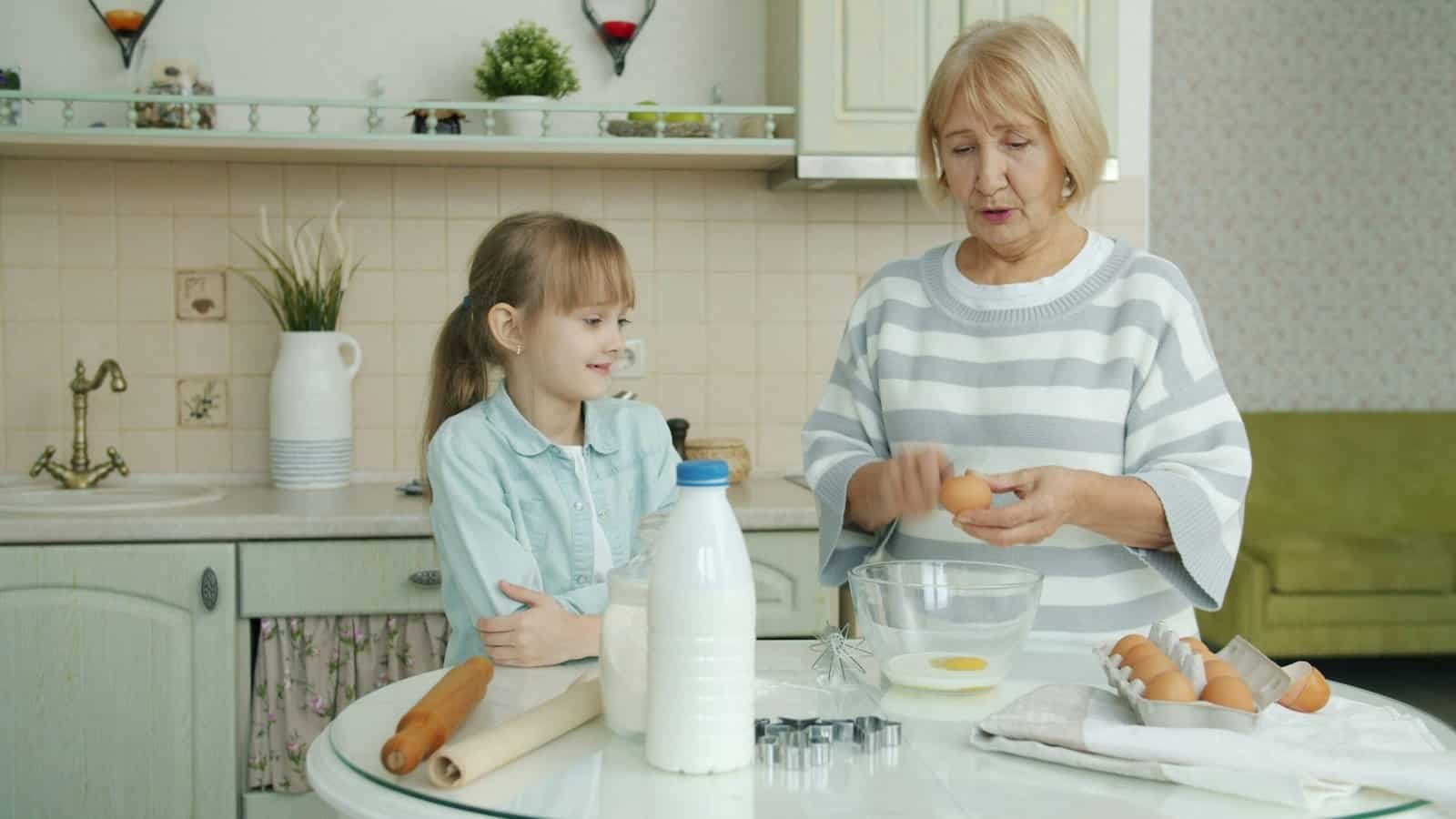
Home baking has a higher failure rate than home cooking. The reason isn’t talent: it’s that baking is unforgiving in ways savory cooking isn’t. A pan of roast vegetables tolerates approximate temperatures, vague timings, and missing ingredients. A loaf of bread does not. The flour that wasn’t measured correctly, the butter that wasn’t actually room temperature, the oven that runs twenty degrees off the dial reading, the mixing bowl too small to fold without splattering: each becomes the difference between a result that works and one that goes in the trash. For our current top picks, see the best silicone baking mats guide.
The fix is infrastructure, not technique. A baker working with the right tools and a properly equipped station succeeds far more often than the same baker working with whatever happens to be in the kitchen. Setting up a real baking station means making conscious decisions about equipment, measurement, storage, and workflow rather than improvising each time the urge to bake arrives.
This guide walks through what a functional home baking station actually needs, how to choose the equipment that matters most, the food safety considerations that don’t get enough attention (raw flour and raw eggs both deserve respect), and the satellite guides for going deeper on each component.
Last updated: June 6 2026 | By Austin Murphy
Food safety note: Raw flour and raw eggs both carry a real foodborne illness risk that home bakers routinely underestimate. The USDA guidance on minimum cooking temperatures and the broader food safety framework cover what’s actually known. Don’t taste raw cookie dough, even if it’s traditional.
Key Takeaways
- The mixer is the highest-leverage single piece of baking equipment; choose based on baking volume and dough types rather than aesthetics
- Accurate measurement (weight beats volume) matters more in baking than any other category of home cooking
- Oven calibration and temperature verification are the most under-addressed source of baking failures
- Raw flour can carry E. coli, and raw eggs can carry Salmonella, per USDA food safety guidance; safe handling matters even when the final product will be cooked.
Why a Real Baking Station Improves Results
The difference between a baker who succeeds reliably and one who fails routinely is usually not skill. It’s whether the necessary tools are present, organized, and used consistently. A baker who has to dig through three cabinets to find the kitchen scale ends up not using the scale. A baker who can’t easily access the mixing bowls keeps reusing the wrong size. A baker without good measuring tools improvises measurements.
The infrastructure problem compounds. Each shortcut produces a slightly worse result. The baker concludes that baking is hard and temperamental, when the actual issue is that the station isn’t set up to support success.
The food science behind baking adds another layer. The reasons that bread doesn’t rise, cookies spread too much, cakes sink in the middle, pie crust gets tough, or meringue won’t stiffen are all chemistry problems with chemistry solutions. The equipment lets the technique work; the technique lets the chemistry happen.
A functional baking station combines reliable equipment, accurate measurement, organized storage, and an understanding of why each piece matters. The investment is real but one-time. The payoff is a kitchen that produces results consistently.
The Core Equipment
Most baking happens with the same five pieces of equipment doing the heavy lifting. Get these right, and the kitchen handles ninety percent of common recipes.
A mixer. Stand mixer for heavy doughs and frequent baking; hand mixer for occasional baking and lighter batters. The decision criteria live in how to choose the right stand mixer, and the head-to-head comparison of stand mixer vs hand mixer.
Accurate measurement tools. A digital scale is the highest-value purchase. Cups and spoons for the recipes that demand them. See kitchen scales, measuring cups and spoons.
Mixing bowls in graduated sizes. A set with multiple sizes lets you choose the right vessel for the job. See mixing bowl sets.
Baking surface and pans. Sheet pans, cake pans, and bread pans cover most needs. Bakeware sets for home bakers cover the comprehensive options; baking sheets and cookie sheets the most-used single category.
Cooling and finishing. Cooling racks let baked goods finish properly without going soggy on the bottom. See cooling racks for baking.
Baking Station Setup Decision Matrix
The matrix below maps household baking style and budget to the equipment direction and the satellite guides for each.
| Profile | Equipment Priority | Direction | Linked Guide |
|---|---|---|---|
| Beginner, occasional baking | Hand mixer + basic bakeware | Affordable hand mixer, sheet pan, mixing bowls, scale | Hand mixers + Hand mixers under $50 |
| Regular baker, mixed recipes | Stand mixer + organized bakeware | Mid-tier stand mixer + bakeware set | Stand mixers under $200 + Bakeware sets |
| Bread baker, sourdough focus | Stand mixer with dough hook + bread-specific tools | Quality stand mixer + Dutch oven for no-knead | How to choose stand mixer + Dutch ovens |
| Pizza enthusiast | Pizza stone + dough handling | Stone for oven + stand mixer with dough hook | Pizza stones for home ovens |
| Hands-off bread baking | Bread machine | Bread maker handles the cycle automatically | Bread makers under $100 |
| Cookie production | Multiple sheet pans + silicone mats | Three to four baking sheets + reusable mats | Baking sheets + Silicone baking mats |
| Pastry, pie focus | Rolling pin + temperature control | Marble or wooden rolling pin + chilled work surface | Rolling pins |
| Cake and frosting work | Mixer + cake pans + cooling system | Stand mixer + multiple cake pans + cooling racks | Cooling racks |
| Limited counter space | Multi-function compact tools | Hand mixer + nesting bowls + collapsible cooling | Mixing bowl sets |
| Confused by stand mixer vs hand mixer choice | Direct comparison needed | Comparison of capacity, capability, price | Stand mixer vs hand mixer |
| Want precise measurement | Digital scale primary; cups as backup | Kitchen scale plus standard measuring tools | Kitchen scales + Measuring cups and spoons |
| Recurring failures with bread or cake | Diagnose the chemistry first | Read the food science explainers before changing equipment | Why bread doesn’t rise + Why cakes sink |
The Mixer Decision
The mixer is the single most consequential equipment decision in baking. The two choices are stand mixer and hand mixer, and the right answer depends on baking style and frequency.
Stand mixers handle heavy doughs (bread, cookie dough at scale, pizza dough), free both hands during long mixing tasks, and provide consistent results across batches. The capacity ceiling matters: most home stand mixers handle five to seven quarts of bowl volume, which translates to roughly two to three loaves of bread per session.
The picks for the entry tier live in stand mixers under $200; the broader selection criteria are in how to choose the right stand mixer.
Hand mixers excel at lighter batters (cake batters, whipped cream, frosting, eggs), store in a drawer when not in use, and cost a fraction of stand mixers. The limitation: heavy doughs strain the motor and overwork the user’s arm.
See best hand mixers and the budget tier in hand mixers under $50.
The head-to-head comparison in stand mixer vs hand mixer walks through the specific tradeoffs.
For households that already know they only want hands-off bread: a bread maker sidesteps the mixer question entirely for the bread use case. The downside is that bread makers don’t substitute for mixers in cake, cookie, or pastry work.
Measurement: Where Baking Diverges From Cooking
Savory cooking forgives measurement imprecision. Baking does not. A two-percent variation in flour quantity is the difference between a working cookie recipe and a flat puddle on the sheet pan.
Use a scale. The single highest-leverage move in home baking. Weight measurement removes the variables of how packed the flour is, how settled the sugar is, how the cup was filled. The picks for the category live in kitchen scales.
Cups still matter for liquids and small quantities. Half a teaspoon of baking soda isn’t worth weighing. Eight cups of broth in a soup isn’t worth weighing. The category lives in measuring cups and spoons.
Volume-to-weight conversions vary widely. The reason recipes from different sources produce different results is often that “one cup of flour” means 120 grams to some and 140 grams to others. How to measure flour covers the technique that makes volume measurement consistent when scales aren’t available.
Temperature matters too. Room temperature butter has specific properties that cold or melted butter don’t. Eggs at room temperature incorporate differently than cold eggs. The explainer at why room temperature butter matters covers the chemistry.
The Pans and Bakeware
Bakeware quality and selection determines what you can bake and how reliably.
Sheet pans (half sheet). The most-used single pan in baking. Used for cookies, sheet cakes, roasted vegetables, oven-baked sides. Two to four pans let you produce in volume. See baking sheets and cookie sheets.
Silicone baking mats. Reusable nonstick surface that fits standard sheet pans. Eliminates parchment for most uses. See silicone baking mats.
Comprehensive bakeware sets. For new kitchens, a coordinated bakeware set covers most needs cheaper than buying pieces individually. See bakeware sets for home bakers.
Specialty pans. Cake pans (round and square), bundt pans, loaf pans, pie pans, muffin tins. Add pieces as recipes call for them.
Pizza stones. Turn a home oven into something approximating a wood-fired pizza oven. Also work for breads, particularly no-knead and artisan loaves. See pizza stones for home ovens.
Dutch ovens. Essential for no-knead bread. The closed environment traps steam during the first phase of baking, producing artisan-style crusts impossible in open baking. See Dutch ovens.
The Tools That Earn Their Drawer Space
Beyond the core equipment, several smaller tools make specific baking tasks dramatically easier.
Rolling pins. Pie crust, pasta, cookies, biscuits. Rolling pins for home bakers covers the picks.
Mixing bowls in graduated sizes. The bowl too small for the job is the bowl that splatters. A set with multiple sizes solves this once. See mixing bowl sets.
Cooling racks. Bread, cookies, and cakes need airflow underneath while cooling. Cooling racks for baking.
Bench scrapers. Cut dough, transfer ingredients, clean work surfaces. The most underrated baking tool by people who haven’t used one.
Whisks of varied sizes. Small for vinaigrette and small bowl work; balloon whisk for incorporating air.
Silicone spatulas. Fold without deflating, scrape bowls clean, work hot without melting.
Oven thermometer. Most home ovens run hot or cold relative to the dial reading. An inexpensive thermometer reveals the actual temperature.
Hand utensils. See kitchen utensil sets for the general category.
Oven Calibration: The Hidden Variable
Most baking failures attributed to bad recipes are actually oven temperature failures. The home oven dial says 350°F; the actual temperature is 320°F, or 380°F, or oscillates between the two as the heating cycle kicks on and off.
The investigation is simple. Buy an inexpensive oven thermometer. Set the oven to 350°F. Let it preheat fully. Check the actual temperature. The reading is rarely what the dial promised.
The fix depends on the magnitude of the gap. Small discrepancies (under 15°F) can be compensated for by adjusting the dial setting. Larger discrepancies often warrant professional calibration of the oven thermostat.
Convection ovens add another variable: the fan circulates heat, which usually means recipes need to be cooked at a temperature lower than the original specification or for a shorter time. The explainer at difference between convection and conventional ovens covers the practical adjustments.
Toaster ovens have become serious alternatives for smaller-batch baking. They preheat faster, use less energy, and don’t add as much heat to the kitchen. Toaster ovens under $100 and the smaller-tier in toaster ovens under $75 cover the picks.
The Food Science You Need to Know
Baking is chemistry. Understanding the few key reactions transforms troubleshooting from guessing to diagnosing.
Why bread rises. Yeast consumes sugar and produces carbon dioxide. The gluten network in the dough traps the gas, expanding the loaf. How yeast actually works covers the mechanism; why bread doesn’t rise covers the failure modes.
Why cookies spread. Butter melts and the dough loses structure before the flour has set. Temperature management during prep and baking determines outcome. See why cookies spread too much.
Why cakes sink. Usually too much leavening, undermixed batter, or opening the oven too early. Why cakes sink in the middle covers the specific failures.
Why pie crust gets tough. Overworked dough develops gluten, which makes the crust chewy rather than flaky. Why pie crust gets tough covers technique.
Why meringue won’t stiffen. Fat contamination in the bowl, undermixed egg whites, or wrong sugar incorporation. Why meringue won’t stiffen walks through diagnosis.
Baking soda vs baking powder. Different leaveners, different mechanisms, different recipe applications. See baking soda vs baking powder.
Why bread goes stale. Starch retrogradation, not moisture loss alone. Why bread goes stale covers what’s actually happening.
Why food browns. The Maillard reaction and caramelization both contribute to the colors and flavors of baked goods. Why food browns when cooked covers both.
📑 Recommended Read: The right cookware pairs with the right bakeware. Cast iron skillets bake bread and pizza beautifully; Dutch ovens transform no-knead recipes. Check out our complete guide on how to choose the right cookware for the pieces that double as baking equipment.
You can convert a recipe between serving counts before deciding.
You can sequence a multi-dish meal without the panic before deciding.
You can convert between Fahrenheit, Celsius and gas mark before deciding.
Food Safety: The Underappreciated Baking Concern
Raw flour and raw eggs both carry foodborne illness risk. The USDA food safety guidance is unambiguous; the FDA has specifically warned about raw flour and E. coli risk after multiple outbreaks tied to raw cookie dough, and the CDC food safety guidance covers the broader pathogen and prevention framework that applies in home kitchens.
The key practices:
Don’t eat raw cookie dough or batter. The eggs may carry Salmonella; the flour may carry E. coli. Both are killed by baking but neither is safe in the bowl.
Heat-treat flour for no-bake recipes. If a recipe calls for raw flour (some no-bake cookie or edible cookie dough recipes), heat the flour in the oven first to kill any bacteria present.
Refrigerate dough between handling sessions. Cookie dough and pie dough should go back to the fridge between steps, particularly in warm kitchens.
Wash hands and surfaces. Flour-coated counters look clean and can carry bacteria from the flour itself. Wipe down work surfaces after baking, not just before.
Bake to safe internal temperature. Most baked goods (breads, cakes, cookies) reach safe temperatures well into the cook. Custards, cheesecakes, and underbaked centers are the cases to watch. See the USDA safe minimum temperature chart for specific guidance.
The food storage question. Baked goods that contain dairy or eggs (cream pies, custards, cheesecakes) need refrigeration. How long food lasts in the refrigerator covers the timing.
Ingredient Storage and Organization
A baking station that requires hunting for flour every time loses to one that has flour, sugar, baking soda, and yeast in dedicated, accessible spots.
Airtight containers for staples. Flour, sugar, brown sugar, oats, baking soda, baking powder. Glass or BPA-free plastic. Label everything; assumed contents become wrong contents over time. See pantry storage containers.
Pantry organization that supports baking. Group baking ingredients together. Within the group, organize by frequency of use. See cabinet and shelf organizers for the broader infrastructure.
Refrigerated baking ingredients. Yeast (after opening), butter, eggs, certain flours (whole wheat, almond) benefit from cold storage. Group them in a dedicated zone of the refrigerator.
Storage timeline awareness. Flour has a longer shelf life than yeast or baking powder. Replace leaveners more often than you replace flour. Stale leavener is a common cause of bread not rising or cakes failing to set.
Specialty ingredients. Olive oil for savory baking, vanilla, spices. The olive oil grades explainer covers what extra virgin, virgin, and refined actually mean for baking versus cooking applications.
Workflow and Setup
A functional baking station isn’t only about which tools are present; it’s about how they’re arranged for efficient use.
Dedicated baking zone if possible. A corner of counter space that doesn’t get repurposed for daily cooking lets you set up and stay set up.
Tools within reach of the mixer. Spatulas, scraper, measuring cups stored near where they’re used.
Sheet pan storage. Vertical storage takes less space than stacked and protects nonstick surfaces. A simple cabinet organizer with vertical dividers works.
Cleaning workflow built in. A nearby trash for parchment and packaging, towels accessible, sink within reach. Friction in cleanup means cleanup gets postponed.
Cooling space mapped in advance. Multiple cooling racks set up before the first batch comes out of the oven prevents the bottleneck of nowhere-to-put-it.
Storage for finished baked goods. Containers, bread bags, freezer-safe bags ready before baking starts. See meal prep containers for the broader storage category.
Common Mistakes
Skipping the scale. Volume measurement variance is the single most common cause of inconsistent results.
Using the wrong size mixing bowl. Too small splatters; too large doesn’t let beaters reach. A set in graduated sizes solves this.
Cold ingredients when room temperature is called for. Butter, eggs, and milk all incorporate differently at different temperatures.
Overmixing batter or dough. Overdeveloped gluten makes cakes tough and pie crusts chewy.
Opening the oven early. Cakes sink, soufflés fall, bread loses oven spring. Use the oven light and window, not the door.
Trusting the oven dial. An oven thermometer reveals what’s actually happening.
Eating raw cookie dough. Raw flour and raw eggs both carry foodborne illness risk per USDA guidance.
Old baking powder or baking soda. Leaveners lose potency over time. Replace every six months even if the container isn’t empty.
Substituting ingredients without understanding the consequences. Different fats, sugars, and flours behave differently in baking chemistry. Substitutions in savory cooking forgive; in baking, they often don’t.
Not preheating fully. Putting food into an oven that’s only halfway to temperature changes the cook from the beginning.
Storing baked goods incorrectly. Some need airtight containers, some need to breathe, some belong in the fridge. The wrong storage method shortens useful life.
Buying every gadget. Most niche baking tools (donut pans, cake pop pans, specialty molds) get used once. Add specialty equipment only after the basics are mastered.
Building the Station in Phases
For households starting from nothing, a sequential build prevents both overspending and equipment paralysis.
Phase 1: measurement and mixing. Kitchen scale, measuring cups and spoons, mixing bowls, hand mixer.
Phase 2: basic bakeware. Two sheet pans, one cake pan, one bread pan, one pie pan.
Phase 3: oven verification. Oven thermometer. Calibrate baseline before adding more equipment.
Phase 4: storage and organization. Pantry containers, cabinet organizer for baking zone.
Phase 5: upgrade or specialize. Stand mixer if hand mixer is limiting; pizza stone if you bake pizza; Dutch oven for bread.
Phase 6: specialty. Bread maker if hands-off bread is the goal; bench scrapers, specialty pans, decorating tools as needed.
Total spend for a functional baking station ranges from one hundred fifty dollars (basic) to six hundred dollars (well-equipped) over time. Spreading the build across months lets each addition prove its value before the next.
Related guide: kids’ knives for baking help.
Related: bowl scrapers.
Frequently Asked Questions
Do I really need a kitchen scale? For consistent baking, yes. Volume measurement variance is the most common cause of failed recipes. The cost is low; the benefit is large.
Stand mixer or hand mixer? Depends on baking volume and dough types. The direct comparison is in stand mixer vs hand mixer.
Is a bread machine worth it? For households that want fresh bread without active engagement, yes. For bakers who enjoy the process or want to make non-bread items, the mixer is more versatile. See bread makers under $100.
What’s the most-used baking pan? The half sheet pan. Cookies, sheet cakes, roasted vegetables, all use the same workhorse pan. Baking sheets and cookie sheets covers the picks.
Why does my baking fail when the recipe is the same? Usually it’s measurement, temperature, or ingredient age. Check the oven temperature with a thermometer, weigh rather than measure by volume, and verify leaveners haven’t expired.
Can I bake without a stand mixer? Yes. Hand mixer plus arm strength handles most home recipes. The stand mixer is convenience and consistency, not necessity.
How long do baking ingredients last? Flour: months to a year sealed; less if open. Baking soda and powder: six months active after opening. Yeast: months refrigerated. The food storage timeline covers the broader question.
Is parchment paper or silicone mat better? Silicone for repeated use; parchment for ease and disposal. Most kitchens benefit from both.
Why do my cookies turn out different each time? Usually ingredient measurement variance or oven temperature variability. Standardize measurement (use the scale) and verify oven temperature. See why cookies spread too much for the specific failure modes.
Should I taste cookie dough as I go? No. Raw flour and raw eggs both carry foodborne illness risk per USDA food safety guidance. Bake before tasting.
References
- United States Department of Agriculture, Food Safety and Inspection Service. Safe Minimum Internal Temperature Chart and Food Safety Education Resources. USDA FSIS / FoodSafety.gov. https://www.foodsafety.gov/food-safety-charts/safe-minimum-internal-temperatures
- Centers for Disease Control and Prevention, US Department of Health and Human Services. Food Safety Information Portal. CDC.gov/foodsafety. https://www.cdc.gov/foodsafety/
Related Reading
Keep going with the best muffin pans, how to soften butter quickly, how to store flour long term, springform pan versus cake pan, why brown sugar hardens, and why a cake turns out dense. Also explore: wine fridges home storage, glass vs metal baking pan, smart cameras for home security, woks for home cooking, loaf pans bread baking, how to set up a smart home, and smart locks for home security. Also explore: mesh wifi systems, and instant pot vs slow cooker.
Also see: adjustable measuring cup vs measuring cups, pastry cutters, cookie scoops, personal pizza pans.
More Guides in This Collection
- bowl scrapers
- bread proofing baskets
- bread knives
- bread machine
- cake pans home bakers
- bread machines for occasional bakers
- microwave ovens
- bread machine dough then oven bake
- bread machine vs oven baking
- bread machine vs stand mixer
- cleaning a stand mixer
- a heavier stand mixer worth it
- toaster vs toaster oven
- where should you store a stand mixer
Related guides: choosing bundt pans.
Related in this cluster: our matcha whisks and sets guide, our picks for bread machines for sourdough, our picks for bread machines for beginners.
Two pieces of the setup have their own guides: knowing what your oven actually does and keeping a starter somewhere you can read it.
Room temperature affects every rise. Working around a cold kitchen covers the adjustments that matter.
