
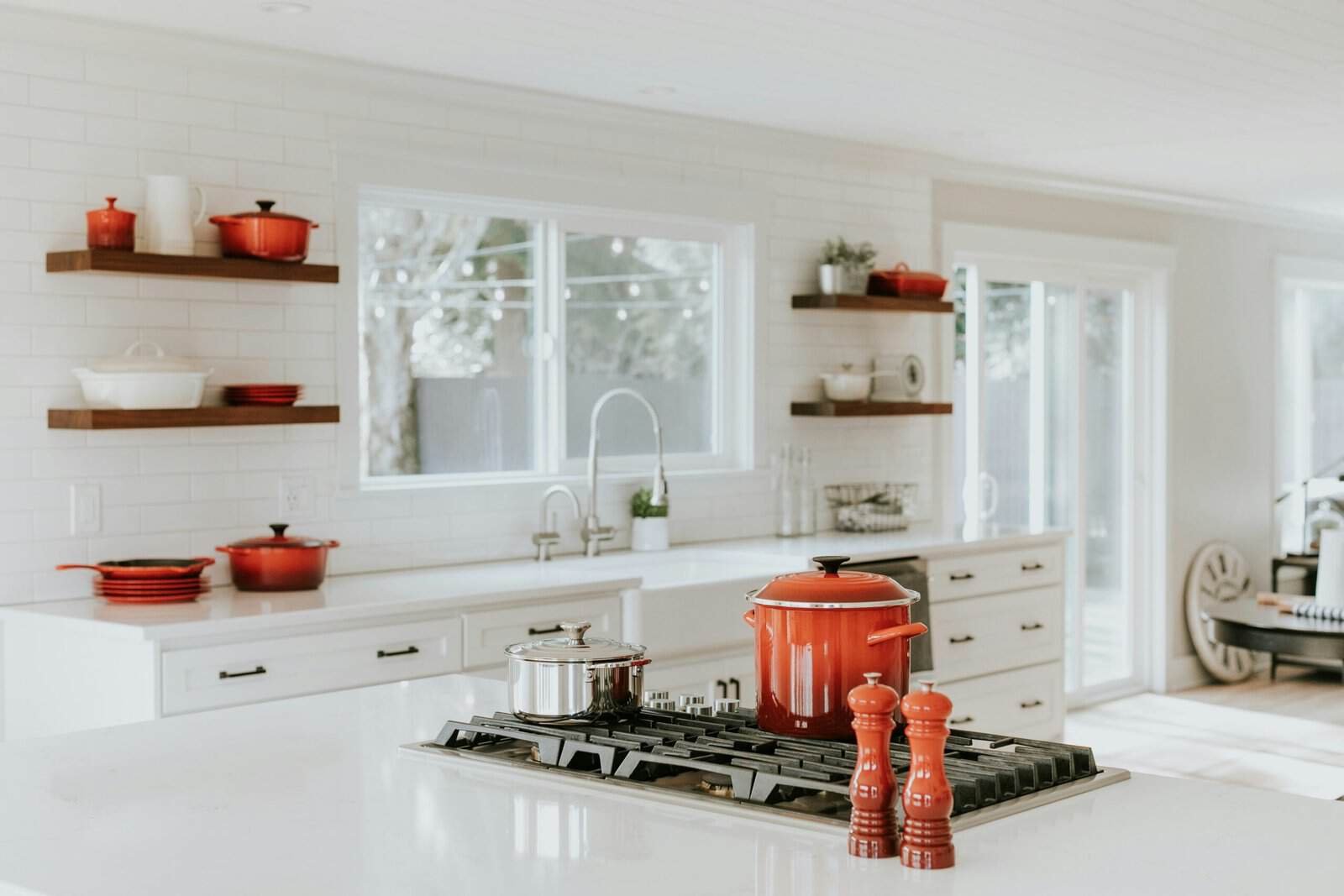
Cookware is the longest-lived purchase in most kitchens. A good piece outlives the renter, the apartment, sometimes the relationship. Yet the typical buyer assembles a set the way they assemble bookshelves: whatever was on sale, whatever fit the budget that month, whatever a friend recommended without context. The result is a kitchen full of pans that don’t actually match the stove, the cooking style, or the household’s real concerns about safety and longevity. For our current top picks, see the best stainless steel cookware sets guide. For more, see our guide on choosing a nonstick pan specifically. Not sure what size you need? You can try our cookware size calculator to get a quick starting point.
The choice has gotten more complicated. Induction stoves require ferromagnetic bases. Concerns about PFAS in nonstick coatings have reshaped how careful shoppers approach the category. Cast iron is having a renaissance. Stainless steel still confuses people about why food sticks. Dutch ovens carry premium pricing without clear guidance on when they’re worth it.
This guide walks through what actually matters when choosing cookware: stove compatibility, material trade-offs, the safety questions worth taking seriously, and the oversold ones, and the satellite guides for going deeper on each category.
Last updated: June 6 2026 | By Austin Murphy
Safety note: Cookware safety claims, particularly around nonstick coatings and PFAS, vary widely in accuracy across online sources. This guide cites the federal toxicological profile rather than industry marketing or alarmist framings. Cooking-related fires are the leading cause of US home fires; the precautions covered here are not optional decoration.
Key Takeaways
- Stove type sets the first constraint: induction requires ferromagnetic bases, gas works with anything, and electric coil works with flat-bottomed pans.
- No single material does everything well; most households need two or three pieces in different materials.
- PFAS concerns are real but specific; PFOA and PFOS were phased out of US cookware in 2013-2015, and modern nonstick uses different fluorinated compounds that the federal toxicological profile addresses with nuance
- Cookware is also a fire risk: unattended cooking is the leading cause of US home fires per NFPA data, and the cookware choices around it (handles, weight, oil capacity) affect outcomes when something goes wrong.
Why Cookware Choice Affects More Than Just Cooking
The pan does three jobs at once: it transfers heat from the burner to the food, it survives years of repeated cycles between cold and hot, and it does both without leaching anything into the food or contributing to a kitchen fire. Each material handles those three jobs differently, and the differences matter for daily cooking outcomes and long-term household safety.
Heat transfer determines whether a steak gets a crust or steams in its own juices. Material durability determines whether the pan lasts five years or fifty. Coating composition determines what is or isn’t on the food. The Agency for Toxic Substances and Disease Registry has published a detailed toxicological profile on PFAS that addresses the cookware question with more nuance than most blog posts on the topic; the actual story is neither “all nonstick is poison” nor “any modern coating is fine,” but a specific picture about which compounds are used, what temperatures degrade them, and what exposure routes matter.
Fire risk gets less attention but is the more immediate concern. The National Fire Protection Association data identifies cooking as the leading cause of US home fires, with unattended cooking the leading contributing factor. Cookware design (heavy bases that stay stable, handles that don’t conduct heat, lids that fit) interacts with that risk picture daily.
Pieces like cast iron cookware that lasts for generations represent one approach (heavy, fire-resistant, no coating to degrade); pieces like premium nonstick sets represent another (lower weight, easier release, requires more careful temperature management). The right approach combines pieces rather than picking one.
The Stove Type Constraint
Stove technology dictates which cookware works at all. Get this wrong, and even the best pan in the kitchen is decorative.
Induction. Requires ferromagnetic material in the base. Cast iron and most stainless steel work; aluminum, copper, and glass don’t unless they have a magnetic plate bonded to the bottom. The category for cookware for induction stoves covers what’s actually verified. Portable induction cooktops have the same compatibility requirement.
Gas. Works with everything. Heat distribution is uneven (concentrated at the burner flame), which favors heavier bases that buffer the hot spot. The cookware for gas stoves picks reflect that requirement.
Electric coil. Works with flat-bottomed pans; warped bases and rounded woks transfer heat poorly. Heavier bases help compensate for the slow temperature response of coil burners.
Smooth-top electric (radiant). Flat-bottomed pans only. Heavy cast iron can scratch the glass surface; lift rather than drag.
This single decision rules out roughly half the cookware market for induction-only kitchens and constrains heat distribution for everyone else. Make this call first, then choose materials.
Cookware Selection Decision Matrix
The matrix below maps household situation, stove type, and primary cooking style to the cookware composition that actually fits, and the satellite guides for each direction.
| Profile | Cookware Priority | Material Direction | Linked Guide |
|---|---|---|---|
| Induction stove (any household) | Ferromagnetic base required | Stainless steel + cast iron primary | Cookware for induction + Portable induction cooktops |
| Gas stove (any household) | Braising, soup, slow-cooked bread | Cast iron + clad stainless | Cookware for gas stoves |
| High-heat searing focus | Mass and heat retention | Cast iron skillet, carbon steel | Cast iron skillets + How to season cast iron |
| Eggs, fish, delicate proteins | Reliable food release without seasoning | Quality nonstick used at moderate heat | Nonstick cookware sets + Nonstick pans that last |
| Enameled cast-iron Dutch oven | Heavy lid, oven-safe at high temps | Heat damage to the coating or scratched surface | Dutch ovens + Dutch oven vs cast iron skillet |
| Stir-fry, high-heat Asian cooking | Curved shape, fast heat response | Carbon steel or cast iron wok | Woks for home cooking |
| Pancakes, large breakfast batches | Wide flat surface, even heat | Electric griddle | Electric griddles under $75 |
| Tabletop or extra cooking surface | Versatile single-piece countertop unit | Electric skillet | Electric skillets |
| Counter-space-constrained kitchen | Multi-function, small footprint | Toaster oven + small skillet combo | Toaster ovens under $100 + Toaster ovens under $75 |
| PFAS-concerned household | Avoid coated nonstick; favor uncoated materials | Cast iron + stainless steel + carbon steel | Cast iron skillets + Cast iron longevity |
| Light-weight cooking (small hands, mobility limits) | Avoid heavy cast iron in standard sizes | Lighter aluminum-core stainless, small cast iron only | Nonstick sets |
| Wondering about stainless sticking | Technique issue, not pan issue | Keep stainless; learn the preheat method | Why stainless steel sticks |
| Wondering about nonstick performance loss | Heat damage to coating or scratched surface | Replace pan; manage heat going forward | Why food sticks to nonstick pans |
Material Decoded
Each common cookware material has a specific profile: where it excels, where it fails, what maintenance it demands, and how long it realistically lasts.
Cast iron. Heavy, slow to heat, holds temperature aggressively. Develops a seasoned surface over time that approaches nonstick performance. The same piece can run from stovetop to oven to grill, sears the way no coated pan can, and lasts essentially forever with basic care. The downsides: weight is real, it rusts if mishandled, and reactive acidic foods (tomato, wine reductions) can affect the seasoning. The cast iron skillets picks cover the category, and how to season cast iron is the technique anchor.
Enameled cast iron. The weight and heat retention of cast iron are without the seasoning requirement. The enamel coating handles acidic foods and cleans more conventionally. Most commonly seen in Dutch ovens; covered in best dutch ovens and compared directly to bare cast iron in dutch oven vs cast iron skillet.
Stainless steel. The workhorse of restaurant kitchens. Doesn’t react with acidic foods, handles high heat, lasts indefinitely if not abused. The common complaint is sticking; why stainless steel cookware sticks explains the mechanism (it’s usually a preheat issue, not a pan defect). Quality stainless steel has aluminum or copper core layers for heat distribution.
Nonstick (PTFE-based). Easy food release, low oil requirements, simple cleanup. Limitations are real: coatings degrade above approximately 500°F and don’t tolerate metal utensils or aggressive scrubbing. Lifespan is measured in years rather than decades. The picks for the category live in best nonstick cookware sets and the durability-focused nonstick pans that actually last; the mechanism behind common failures is covered in why food sticks to nonstick pans.
Carbon steel. Functionally similar to cast iron but lighter and faster to heat. Used heavily in professional kitchens for fry pans. Requires seasoning as cast iron does.
Aluminum. Lightweight, conducts heat well, and is cheap. Pure aluminum is reactive and dents easily; most consumer aluminum is anodized or clad with stainless steel. Common as the core of clad stainless cookware.
Copper. Best heat conductivity of any material. Expensive, requires polishing for appearance, often lined with tin or stainless steel to prevent reactivity. More common in specialty cookware than in general use.
The PFAS and Nonstick Conversation
This topic generates more confusion than any other in the cookware category. The federal toxicological profile addresses what’s actually known; the picture is more specific than either alarmist warnings or industry reassurance.
PFAS (per- and polyfluoroalkyl substances) describes a broad class of synthetic chemicals with environmental persistence. PFOA and PFOS were the historical compounds of concern in nonstick manufacturing. Both were phased out of major US cookware production between 2013 and 2015 under industry agreements with the EPA. Current PTFE-based nonstick cookware made post-phaseout uses different fluorinated compounds without the documented health profile that triggered the original concern.
What that means for the buyer:
Modern PTFE nonstick is not the same product as pre-2015 nonstick. Treating them as equivalent in safety conversations conflates two different generations of materials.
Heat is the real constraint. PTFE coatings begin to degrade at sustained temperatures above approximately 500°F. Stovetop cooking at normal heat ranges (sub-medium to medium-high) doesn’t reach that temperature in the coating itself. Empty preheating, broiler use, or extended high-heat cooking can.
Damaged coatings should be replaced. Once the coating is scratched, scored, or visibly degraded, the pan has aged out regardless of remaining cosmetic life.
Households that want to avoid the question entirely can simply choose uncoated materials. Cast iron, stainless steel, carbon steel, and enameled cast iron have no PFAS to consider. This is a reasonable position; the cooking versatility tradeoff is modest if the kitchen builds around the right pieces.
Ceramic-coated cookware is the marketing-favored alternative but is often less durable than premium PTFE. The coating wears faster, performance degrades sooner, and “PFAS-free” claims vary in accuracy across manufacturers.
Building a Functional Set Instead of Buying a Set
The 12-piece matched cookware set is rarely the optimal purchase. Sets include duplicate sizes, low-use specialty pieces, and force the buyer into a single material when the right kitchen blends two or three.
A more useful framing: identify the four to six pieces the household actually uses weekly, then choose the right material for each piece.
The everyday skillet (10 to 12 inches). The most-used piece. Cast iron for searing, nonstick for eggs and fish, stainless for sauce work. Pick based on what gets cooked the most.
The sauce pot (2 to 3 quarts). Stainless steel serves best. Handles reductions, holds heat for sauces, and doesn’t react with acid.
The stock pot or large pot (5+ quart). Stainless or enameled cast iron. For pasta water, soups, beans, and large-batch cooking.
The Dutch oven (5 to 7 quart). If you bake bread, braise meat, or cook stews, this is the highest-leverage single piece. Dutch oven picks address the range.
The second skillet (8-inch). Smaller pan for single eggs, quick sauces, and butter melting. Often, the spot for a single nonstick piece, even in an otherwise nonstick-skeptical kitchen.
Optional specialty pieces: wok for stir-fry (see woks for home cooking), griddle for breakfast batches (see electric griddles), electric skillet for tabletop or supplementary capacity (see electric skillets).
This approach typically lands at three to six core pieces costing less in total than a matched 12-piece set, while serving the household’s actual cooking needs better.
📑 Recommended Read: Cookware pairs with the rest of the cooking system. The right pan needs the right heat source, the right tools, and the right cleanup workflow. Check out our complete guide on how to choose the right air fryer for the countertop appliance question that interacts most often with traditional cookware decisions.
Heat Management and Why It Matters
Most cookware “failures” trace to heat management rather than to the pan itself. Stainless steel doesn’t stick when properly preheated; nonstick lasts when not blasted on high; cast iron isn’t temperamental once you respect its thermal mass.
Preheat the pan empty before adding fat for stainless steel. The water droplet test is real: drops should bead up and dance across the surface before adding oil. The mechanism is why stainless steel cookware sticks.
Never preheat an empty. The coating reaches its degradation threshold faster without food or oil to absorb heat. This is the single most common way to ruin a nonstick pan.
Cast iron requires patience. Heat the pan slowly to working temperature; once there, it holds.
Heavy bases buffer hot spots. On gas stoves, especially, light pans concentrate burner heat at the flame contact point and burn food before the edges cook.
Different proteins want different heat profiles. The resting meat science and Maillard browning explainer cover what’s happening at the pan surface during cooking.
Kitchen Fire Safety: The Underappreciated Cookware Variable
Cooking is the leading cause of US home fires per NFPA data, and unattended cooking is the leading factor in those fires. Cookware design contributes to outcomes when something goes wrong.
Stable bases reduce tip-over risk. Heavy cast iron and clad stainless stay where they’re set; light pans can tip if bumped, especially when full.
Handle design matters for grip under stress. Handles that conduct heat (single-piece stainless steel on a hot pan) require pot holders every time. Insulated or silicone-wrapped handles reduce the missed-grip risk during fast moves.
Frying capacity affects fire potential. Deep-fry recipes in shallow pans are a common fire pattern. Use vessels deep enough for the oil quantity, never fill above two-thirds capacity, and never leave heating oil unattended.
Lid availability is a fire-response infrastructure. A correctly-sized lid is the right response to a grease fire. Smother by sliding the lid in, never lift and pour water. Keep lids accessible while cooking, not buried in a cabinet.
Pair with proper backup tools. Good oven mitts and pot holders are not a luxury; they’re how heavy hot cookware moves safely. Same for a Class K (kitchen) extinguisher if the budget allows.
Cookware and the Countertop Appliance Ecosystem
Traditional cookware doesn’t sit alone. Most modern kitchens combine stovetop pieces with countertop appliances that handle specific tasks better, faster, or with less attention required.
The countertop pieces that interact most with cookware decisions:
Air fryers. Replace pan-frying with many breaded and roasted preparations. See air fryers and air fryers under $100.
Toaster ovens. Replace the full oven for smaller batches; reduce heat output during summer. Toaster ovens under $100 covers the picks.
Microwaves. Reheating, melting, parboiling. See microwave ovens.
Electric kettles. Boiling water faster than stovetop; some pasta and rice workflows now start with kettle water. Electric kettles and the budget tier in electric kettles under $50.
Electric grills. Indoor grilling without venting outdoor smoke. Electric grills under $100.
The right move is usually to combine: a small set of well-chosen pans plus the countertop appliances that match the household’s high-frequency tasks. Total spend often comes in below a comprehensive cookware-only setup.
Common Mistakes
Buying a matched 12-piece set. Almost always includes pieces you won’t use and forces you into one material when the right kitchen blends two or three.
Using nonstick at high heat. The fastest way to degrade the coating and the most common cause of premature pan failure.
Ignoring stove compatibility. Beautiful aluminum cookware doesn’t work on induction. Verify the magnetic-base requirement before purchase if you have an induction stove.
Treating cast iron as fragile. Modern cast iron is remarkably tolerant. The “never use soap” rule was true for unseasoned cast iron generations ago; modern seasoning handles light dish soap fine.
Dragging heavy cookware on glass cooktops. Lift, don’t slide. Glass surfaces scratch and chip from dragged cast iron.
Storing cast iron wet. The fastest way to rust an otherwise indestructible pan. Dry it on the stove for a moment after washing.
Buying based on online ratings alone. Cookware fit depends on stove type, household cooking style, and physical capacity (heavy cast iron isn’t right for everyone). Ratings don’t capture fit.
Believing every “PFAS-free” claim. Verification varies. The most reliable PFAS avoidance strategy is to choose uncoated materials.
Leaving cooking unattended. The NFPA data is unambiguous on this point. The pan choice matters less than whether someone is in the kitchen.
Storing flammable items above or next to the stove. Towels, paper products, plastic containers. Move them.
Discarding cast iron because it rusted. Surface rust scrubs off and re-seasons. Most “ruined” cast iron is recoverable.
Care, Maintenance, and Lifespan
Cookware lifespan varies wildly by material and care.
Cast iron and carbon steel: indefinite with basic care. Heirloom pieces are normal.
Enameled cast iron: decades if not subjected to thermal shock (don’t drop a hot pan in cold water). Chips in the enamel are mostly cosmetic.
Stainless steel: indefinite; can show heat discoloration that’s cosmetic.
Quality nonstick: three to seven years for daily-use pieces with careful handling. Less if abused.
Aluminum: dents and warps with age; warping affects performance on flat cooktops.
Storage matters too. Stacking cookware without protectors can damage interiors, particularly for nonstick. Pan protectors or cloth liners extend life. The broader question of organized pantry storage and using cabinet organizers intersects with cookware longevity.
Tools That Complete the Cookware Setup
A pan without the right surrounding tools loses some of its effectiveness.
Lids that fit. Universal lids cover multiple pan sizes when matched lids aren’t available.
Utensils that match the material. Metal utensils for cast iron and stainless, silicone, or wood for nonstick. See kitchen utensil sets.
Cutting infrastructure. The pan can only do its job if prep is done. Knife sets under $100, and cutting boards cover the prep side.
Temperature verification. Meat thermometers are the only reliable doneness check; visual cues mislead.
Specialty bakeware. Sheet pans, baking sheets, and bakeware sets cover the oven side of the cooking equation.
Heat distribution accessories. A pizza stone turns a home oven into something approximating a wood-fired one for breads and pizzas.
When to Replace Cookware
Several signs indicate a piece has reached the end of its useful life, regardless of material.
- Visible scratches, scoring, or peeling on nonstick coatings
- Warping that prevents flat contact with the cooktop
- Loose handles that wobble even after tightening
- Cracked enamel exposing the underlying cast iron
- Rust pitting on cast iron that doesn’t clean off
- Discolored interior on stainless steel that doesn’t respond to deep cleaning
- Bent or deformed bases on aluminum-core pans
- Loose rivets on handle attachments
- Coating discoloration on the nonstick, suggesting heat damage
- Any sign of metal exposed through a coating layer
For PFAS-coated nonstick specifically, retirement is appropriate at the first sign of coating damage rather than at full visible failure. The cost of a replacement pan is less than the value of avoiding the question.
Frequently Asked Questions
Is nonstick cookware safe? The federal toxicological profile addresses this with nuance; PTFE coatings made post-2015 use different compounds than the phased-out PFOA and PFOS, heat above 500°F degrades coatings, and damaged pans warrant replacement. Uncoated materials sidestep the question entirely.
What’s the best one-pan to own if I can only buy one? A 10-inch cast-iron skillet for most cooks. Sears, sautés, bakes, lasts forever. The picks live in best cast iron skillets.
Why does food stick to my stainless steel pan? Insufficient preheat is the most common cause. The pan needs to be hot before the fat goes in. See why stainless steel cookware sticks for the technique.
Do I need a Dutch oven? If you bake bread, braise meat, or make stews, yes, it does what no skillet can. Otherwise, it’s optional.
Is cast iron worth the weight? For most people, yes. Heat retention and durability are unmatched. For users with grip strength or wrist concerns, smaller pieces (8-inch or 10-inch) deliver most of the benefit at a manageable weight.
Can I use metal utensils on nonstick? No. Even “metal-utensil-safe” nonstick degrades faster with metal contact. Silicone, wood, or nylon.
What’s the difference between cast iron and carbon steel? Similar properties, different weights. Cast iron has more thermal mass; carbon steel heats faster and weighs less. Both seasons.
Should I avoid all aluminum cookware? Bare aluminum reacts with acidic foods. Anodized or clad aluminum is fine; most modern cookware “with aluminum” has the aluminum sandwiched between stainless layers, which removes the contact issue.
How do I know if my cookware is induction-compatible? A magnet should stick firmly to the base. Manufacturers also label compatibility, but the magnet test never lies.
Why does my food cook unevenly? Most commonly, because the pan is too light for the burner output. Heavier bases buffer hot spots. On gas stoves, especially, light pans concentrate heat at the flame contact point.
References
- Agency for Toxic Substances and Disease Registry, US Centers for Disease Control and Prevention. Per- and Polyfluoroalkyl Substances (PFAS) Toxicological Profile. ATSDR. https://www.atsdr.cdc.gov/pfas/
- National Fire Protection Association. Cooking Fire Safety. NFPA Public Education. https://www.nfpa.org/Public-Education/Fire-causes-and-risks/Top-fire-causes/Cooking
Related Reading
Keep going with a sturdy roasting pan, and whether your cookware is oven safe. Also explore: how to store cast iron cookware, how to choose a water filter, choose electric kettle, how to choose the right coffee grinder, choose espresso machine, how to choose the right stand mixer, and how to choose the right blender.
Also see: kids kitchen knives.
More Guides in This Collection
- cookware sets under 100
- dutch ovens under 50
- grill pans
- kitchen shears
- knife blocks storage
- knife sharpeners
- moka pots
- paring knives
- potato mashers
- saucepans everyday cooking
- steak knives
- cast iron vs carbon steel
- chef knife vs santoku
- dutch oven vs stockpot
- how to clean a nonstick pan
- how to cook steak on stove
- how to sharpen a knife
- nonstick vs stainless steel
- carbon steel pans
- chef knives
- clip on pot strainers
- cast iron griddles, for a stovetop flat-top.
- cast iron braisers, for brown-and-braise one-pan meals.
- where a saute pan earns its place
- sets that nest for small kitchens
- nonstick pans safe
- bread machine pans and paddles
- bundt pans
- cake pans home bakers
- cast iron cleaning tools
- cast iron cornbread pans
- cast iron pizza pans
- cast iron woks
- instant pots
- lightweight cast iron skillets
- loaf pans bread baking
- muffin pans
- personal pizza pans
- pie pans
- pizza pans and crisper trays
- pot lid organizers
- silicone handle covers for cast iron
- springform pans
- stockpots
- teapots
- you make pancake batter in a waffle maker
- you use soap on cast iron
- cast iron vs nonstick
- cast iron vs stainless steel
A related question worth asking: buying for how you actually wash up.
If space is driving the decision, see choosing cookware for a tight kitchen.
Related guides: the best cookware for glass top stoves, our picks for nakiri knives, our guide to oil sprayers.
Explore more: our enameled cast iron cookware guide, our stove to oven cookware guide, meat cleavers, our picks for cast iron accessories, the best tools for cooking steak, boning knives, mini cast iron skillets, our picks for santoku knives, our picks for one pan cooking gear.
Knives outlast most cookware with reasonable care. When a knife is genuinely finished covers the failures sharpening cannot fix.
One board habit dulls knives faster than cutting does. Scraping a board with the edge covers why the spine is the answer.
Sharpening tools divide opinion. Whether electric sharpeners are worth it covers what they do to an edge.
Owning fewer pieces than a set suggests is normal. how many pots and pans you actually need covers what earns space.
